If you're weighing up air source vs ground source heat pumps in Scotland, you're not alone — it's one of the most common questions we hear from Aberdeen and Aberdeenshire homeowners. Both systems use the same basic principle to heat your home efficiently, but they differ significantly in cost, installation requirements and long-term performance. This guide cuts through the confusion and helps you work out which is the better fit for your property.
How Do They Both Work?
Both types of heat pump move heat rather than generate it — which is why they're so much more efficient than a gas or oil boiler. The difference is simply where they extract that heat from.
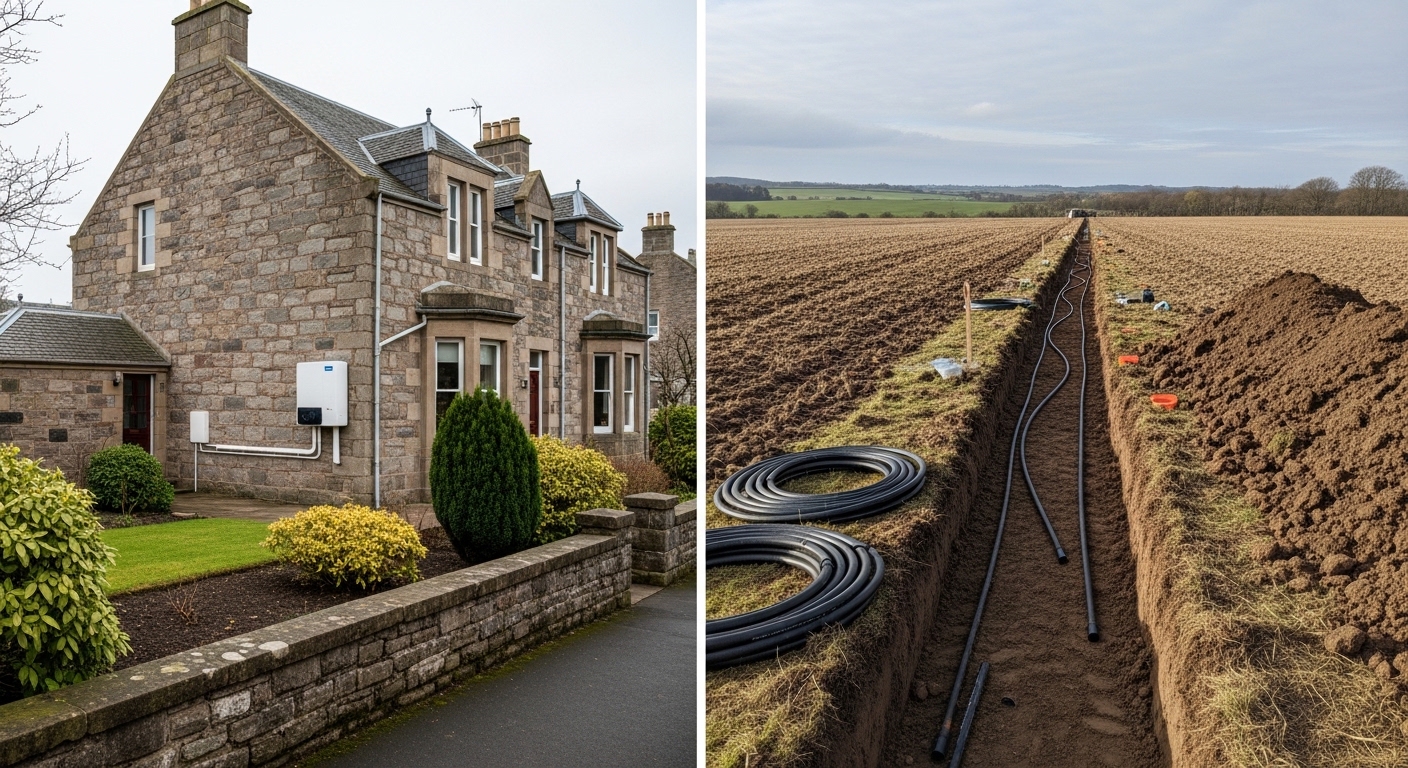
An air source heat pump extracts heat from the outside air, even in temperatures as low as -20°C. A fan draws air over a refrigerant, which absorbs the heat, is compressed to raise its temperature further, and is then transferred to your central heating and hot water system.
A ground source heat pump extracts heat from the ground via a network of pipes — known as a ground loop — buried in your garden or installed in a vertical borehole. The ground maintains a stable temperature of around 8–12°C year round, which the heat pump uses as its heat source.
Air Source vs Ground Source: Key Differences at a Glance
| Air Source | Ground Source | |
|---|---|---|
| Efficiency | ~300% (SCoP 2.8–3.5) | ~350–400% (SCoP 3.5–4.0) |
| Installation cost | £8,000–£15,000 | £20,000–£40,000 |
| Space required | Small outdoor space for unit | Large garden for trenches or borehole |
| Installation time | 1–2 days | Several days to weeks |
| Disruption | Minimal | Significant groundworks |
| Lifespan | 15–20 years | 20–25 years (ground loop 50+ years) |
| HES Grant eligible | Yes — up to £7,500 | Yes — up to £7,500 |
| Best suited to | Most homes | Rural properties with land |
Efficiency: Which Is More Efficient in Scotland?
Ground source heat pumps have a slight efficiency advantage because ground temperatures in Scotland remain stable at around 8–12°C throughout the year. Air temperatures, by contrast, can drop significantly in winter — meaning an air source heat pump has to work harder when heating demand is highest.
That said, modern air source heat pumps have improved dramatically and perform well in Scottish winters. During the January 2025 cold snap, 9 in 10 heat pump owners reported strong performance in freezing conditions. For most homes, the efficiency difference between the two is unlikely to make a meaningful difference to day-to-day running costs — particularly given the much higher upfront cost of ground source.
Cost: Air Source vs Ground Source in Scotland
Air Source Heat Pump Cost
Air source heat pump installation in Scotland typically costs between £8,000 and £15,000. With the Home Energy Scotland Grant of up to £7,500, the net cost for most Aberdeen homeowners is significantly lower. The relatively straightforward installation — no groundworks, no specialist drilling — keeps costs down.
Ground Source Heat Pump Cost
Ground source heat pump installation is considerably more expensive, typically ranging from £20,000 to £40,000 depending on whether a horizontal loop or borehole system is required. The Home Energy Scotland Grant of up to £7,500 (£9,000 for rural homes) applies to ground source too, but still leaves a much higher net cost than air source.
| Air Source | Ground Source | |
|---|---|---|
| Efficiency | ~300% (SCoP 2.8–3.5) | ~350–400% (SCoP 3.5–4.0) |
| Install cost | £8,000–£15,000 | £20,000–£40,000 |
| Install time | 1–2 days | 1–3 weeks |
| Space needed | Small outdoor space | Large garden / land |
| Disruption | Minimal | Significant |
| Lifespan | 15–20 years | 20–25 yrs (loop 50+) |
| HES Grant | Up to £7,500 | Up to £9,000 |
Which Heat Pump Qualifies for the Home Energy Scotland Grant?
Both air source and ground source heat pumps are eligible for the Home Energy Scotland Grant — up to £7,500 for most properties and up to £9,000 for rural homes. An optional interest-free loan of up to £7,500 is also available for both.
Which Should You Choose?
For most Aberdeen and Aberdeenshire homeowners, air source is the right choice. It's more affordable, easier to install and suitable for the vast majority of properties. The efficiency difference is modest and the Home Energy Scotland Grant significantly reduces the upfront cost.
Ground source makes more sense if:
- You have a large rural property with significant garden or land
- You are building a new home or undertaking a major renovation
- Maximum long-term efficiency is the priority and budget is not a constraint
- You want the lowest possible running costs over a 25+ year period
Not sure which is right for your property? Read our full guide to air source heat pump installation in Aberdeen or get in touch for a free assessment.
Frequently Asked Questions
Is a ground source heat pump better than an air source?
Ground source heat pumps are more efficient, but cost significantly more to install and require substantial outdoor space. For most Scottish homeowners, air source offers the best balance of cost and performance. Ground source is better suited to rural properties with land and larger budgets.
What are the downsides of a ground source heat pump?
The main downsides are the high upfront cost (£20,000–£40,000), the significant groundworks required — either shallow trenches or deep boreholes — and the disruption this causes. Ground source also requires suitable ground conditions and sufficient outdoor space.
Which is the most efficient heat pump in the UK in 2026?
Ground source heat pumps are the most efficient, typically achieving 350–400% efficiency. Air source heat pumps typically achieve around 300%. Both significantly outperform gas boilers, which achieve around 90% efficiency at best.
Do both qualify for the Home Energy Scotland Grant?
Yes — both air source and ground source heat pumps are eligible for the Home Energy Scotland Grant of up to £7,500 (£9,000 for rural properties), plus an optional 0% interest loan of up to £7,500.