If you're considering switching to a heat pump, one of the first practical questions is how long the installation will take — and how much disruption to expect. The honest answer is that it depends on the type of heat pump and the condition of your home, but this guide gives you a clear picture of what to expect so you can plan ahead.
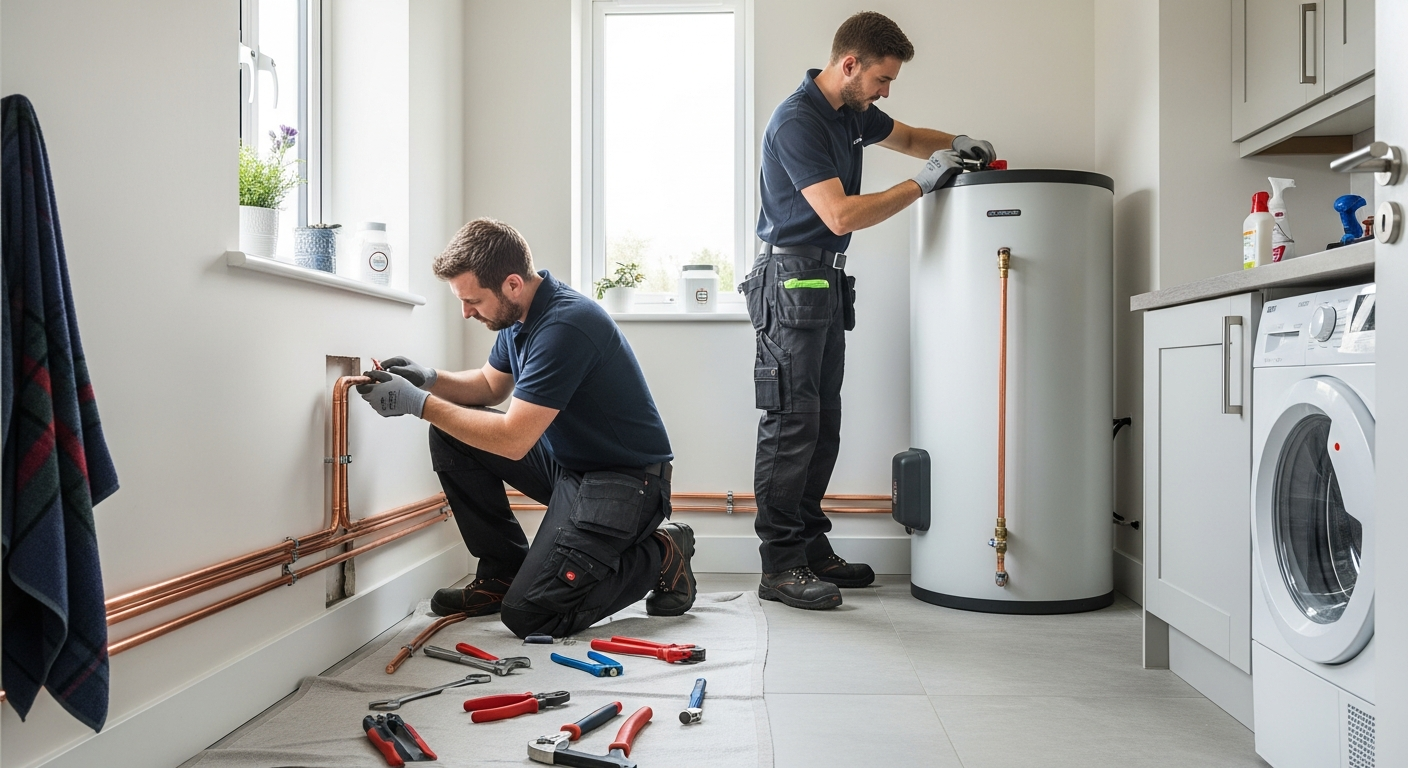
Air Source Heat Pump Installation: How Long Does It Take?
For most Aberdeen and Aberdeenshire homeowners, an air source heat pump installation will take between 2 and 5 days. Here's what typically happens across those days:
Day 1 — Pipework, Cylinder & Radiators
The first day usually involves the most internal disruption. Engineers will install new or upgraded pipework, replace the hot water cylinder if needed, and fit any new radiators required. Your installer will aim to restore your hot water supply by the end of day one where possible.
Day 2 — Installing the Heat Pump Unit
The outdoor heat pump unit is mounted and connected to the internal pipework. Electrical connections are made, controls are wired up and the system is pressure tested. A straightforward installation on a well-prepared property can be complete by the end of day two.
Day 3–5 — Commissioning & Handover
More complex installations — particularly those requiring additional radiators, new electrical work or significant pipework changes — will extend to days three, four or five. The final day involves commissioning the system: testing everything thoroughly and walking you through how to operate and control your new heat pump.
Ground source installations take significantly longer — typically 1–3 weeks due to groundworks.
Ground Source Heat Pump Installation: How Long Does It Take?
Ground source heat pump installation is a much larger undertaking and takes considerably longer — typically 1 to 3 weeks in total.
Horizontal Loop Systems
Pipes are buried in shallow trenches across a large area of garden. Digging and laying the ground loop typically takes 2–4 days, depending on the size of the property and ground conditions. The indoor installation then takes a further 2–3 days.
Borehole Systems
Vertical boreholes require specialist drilling equipment and can take 1–2 weeks for the groundworks alone. The indoor installation follows once the boreholes are complete.
What Affects How Long Heat Pump Installation Takes?
Older Properties
Older homes often require more preparation work — upgrading undersized radiators, replacing a hot water cylinder, improving pipework or upgrading the electrical supply. This is very common in Aberdeen's granite housing stock and can add 1–2 days to the installation.
New Builds
New build properties are generally the quickest to install into. Modern pipework, correctly sized radiators and up-to-date electrical systems mean installations often sit at the shorter end of the 2–5 day range.
Radiator Upgrades
Heat pumps operate at lower flow temperatures than gas boilers, which means existing radiators sometimes need to be upsized. If several radiators need replacing, this adds time to the installation.
Electrical Upgrades
Heat pumps require a dedicated electrical supply. If your existing consumer unit or electrical supply needs upgrading, an electrician will need to carry out this work — which may add a day to the timeline.
Hot Water Cylinder
If your current heating system doesn't include a hot water cylinder — common in homes with combi boilers — one will need to be installed as part of the heat pump installation. This is factored into the 2–5 day estimate but is worth knowing about in advance.
How Much Disruption Should You Expect?
Air source heat pump installation is more involved than a standard boiler replacement, but it is not a major building project. You can expect:
- Engineers working inside and outside your home for 2–5 days
- Some noise from drilling, pipework and the outdoor unit mounting
- Temporary loss of heating and hot water for 1–2 days
- Minor floor or wall access where new pipework is required
How to Prepare for Your Heat Pump Installation
- Clear access to the area where the outdoor unit will be mounted
- Clear internal access to your boiler, hot water cylinder and airing cupboard
- Plan for 1–2 days without heating and hot water — have electric heaters available in winter
- Ensure the pre-installation survey has been completed so there are no surprises on the day
- For ground source, ensure your garden is accessible to machinery
Frequently Asked Questions
How long does heat pump installation take?
Air source heat pump installation takes 2–5 days. Ground source installation takes 1–3 weeks due to the groundworks required.
How long will I be without heating?
Most homeowners are without heating and hot water for 1–2 days. Your installer will aim to restore hot water as quickly as possible. In winter, having electric heaters as backup is advisable.
Does heat pump installation cause disruption?
Air source installation causes moderate disruption for 2–5 days. Ground source is significantly more disruptive due to the groundworks. Neither should be compared to a full building project — more like a thorough boiler replacement.
Does installation take longer in an old house?
It can. Older properties often need radiator upgrades, a new hot water cylinder or electrical work, which can add 1–2 days. A thorough survey beforehand will identify any additional work in advance.
How long does ground source heat pump installation take?
Typically 1–3 weeks in total. The groundworks — trenches or boreholes — take the majority of the time, with the indoor installation following over 2–3 days.